
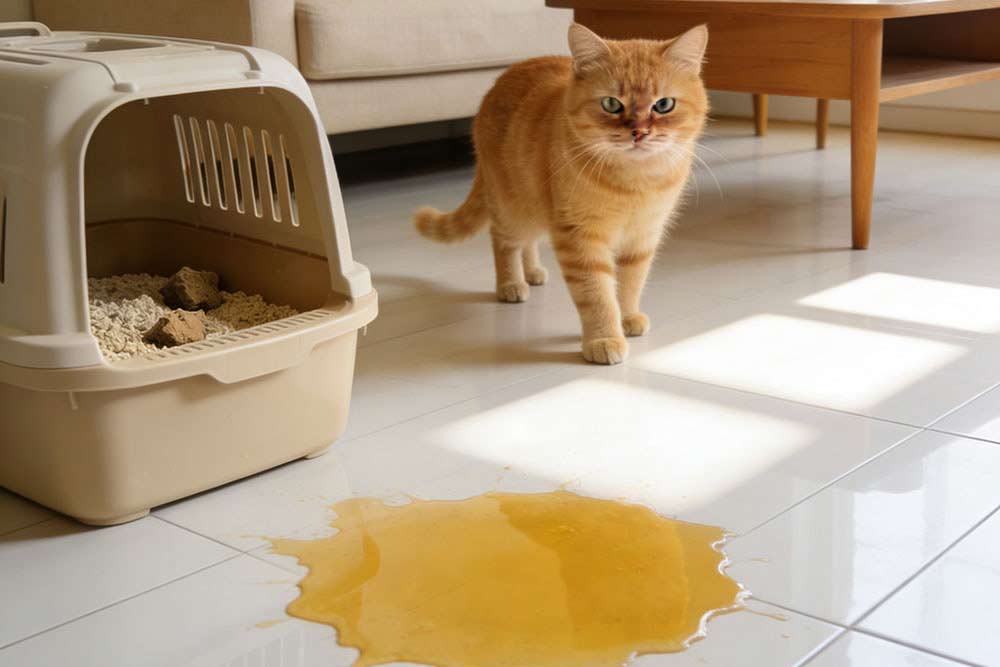
Reading Guide: This article delves into the top three reasons why cats pee outside the litter box and how to fix them. Read from start to finish, or click on the table of contents to go straight to the part you need.
- Is It an Accident or Spraying? How to Tell Why Your Cat is Peeing Outside the Litter Box
- Why Is My Cat Peeing Outside the Litter Box? The 3 Root Causes
- How to Stop Cat From Peeing Outside Litter Box: The 6-Step Vet-Approved Solution
- Realistic Timeline: When Will Your Cat Stops Peeing Outside the Litter Box?
- When to Call a Pro: Signs Your Cat Needs Expert Help
- From Frustration to Harmony: Restoring Peace and Trust
- Get Your Free Kit: Stop Cat Peeing Outside the Litter Box
- Related Articles
“Why is my cat peeing outside the litter box?!”
This frustrated cry echoes among cat owners everywhere, faced with the messy and concerning issue of cat peeing outside the litter box. Before you despair, understand this: what vets call inappropriate elimination isn’t spite—it’s your cat’s most urgent signal that something is wrong.
This ultimate guide is your roadmap to a solution. We’ll help you decode this signal, using a step-by-step, expert-backed process to pinpoint why your cat is peeing outside the litter box. You’ll learn not only how to stop it but how to solve the underlying problem—whether medical, environmental, or behavioral—and restore peace to your home.
Is It an Accident or Spraying? How to Tell Why Your Cat is Peeing Outside the Litter Box
To completely resolve the issue of cat peeing outside box, we must not rush to correct the behavior but first become a “detective.” The core task is to determine, through careful observation, whether the cat is engaging in “Inappropriate Urination” (a toilet habit issue) or “Territorial Marking” (a form of communication and psychological behavior). Only by making the correct distinction can we pinpoint the root cause and effectively address the problem.
Understanding “Inappropriate Urination” (The Common Accident)
The behavior of a cat peeing outside the litter box—known as inappropriate elimination—can stem from various causes, one of which is the cat forming negative associations with the litter box itself or with the experience of urination (often due to past pain or fright while using it).
- Key Behaviors and Signs
Common targets are soft, absorbent areas such as floors, carpets, bathtubs, or—quite tellingly—the owner’s bed or piles of clothing. These spots are often selected for their soft, absorbent texture (which resembles loose litter) or the sense of security they provide.- Assuming the typical squatting posture (distinct from the standing posture of spraying).
- Leaving large volumes of urine on horizontal surfaces.
- Motivations for a Cat Peeing Outside the Litter Box
Your cat may be trying to communicate a problem, strongly declaring: “My litter box situation is unacceptable!” This could also indicate potential health risks. Key factors to investigate include:- Medical Issues: Conditions that cause pain or urgency, such as cystitis, urinary tract infections, or arthritis.
- Litter Box Aversion: A dirty, intimidating, or otherwise unpleasant litter box setup.
- Generalized Anxiety: This can lead the cat to seek out “safer” locations away from the box.
Understanding “Territorial Marking” (Spraying Behavior)
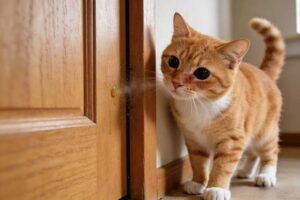
When you find your cat peeing outside the litter box, the first step is to determine whether it’s inappropriate urination (a toileting problem) or spraying (a communication behavior). The key difference lies in intent and posture. Spraying is a normal feline behavior where a cat deposits small amounts of urine, typically on vertical surfaces like walls or furniture. The primary purpose is not to empty the bladder, but to leave a “scent message” to mark territory, signal presence, or self-soothe in response to environmental changes or stress. It’s a deliberate act, not an accident.
- Marking Behaviors and Signs:
- Posture: The cat stands with an upright, quivering tail.
- Action: It backs against a vertical surface, treads with its back feet, and sprays a small, strong-smelling stream of urine backward.
- Targets: Typically vertical surfaces—walls, furniture sides, curtains, door/window frames, or novel objects (e.g., bags, suitcases).
- Key Sign: The characteristic tail quiver distinguishes spraying from other urination.
- Underlying Motivations & Triggers for Marking:
This behavior declares, “I feel insecure or threatened.” The triggers are predominantly social or environmental stressors, including:- Conflict with other household cats (even subtle, non-violent tension).
- The presence of outdoor cats.
- The introduction of new people, pets, or furniture.
- Major routine changes (e.g., moving or renovations).
- General competition in multi-cat households
Understanding marking behavior is just the first step. If you want to delve deeper into why specific cats spray urine, we’ve prepared specialized guides for you:
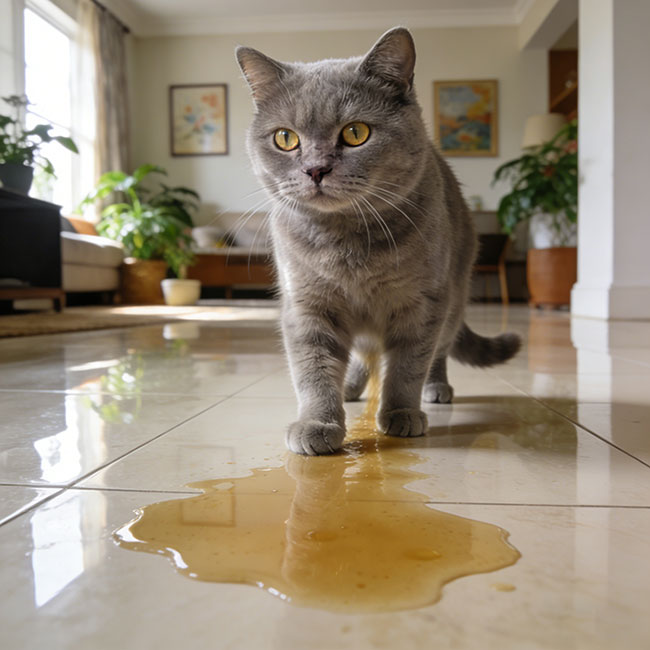
Cat “Coffee” cat peeing outside the litter box.
Why Is My Cat Peeing Outside the Litter Box? The 3 Root Causes
Whether your cat is peeing everywhere around the house or repeatedly avoiding the litter box, this behavior signals an underlying issue. The root cause typically falls into one of three categories: Medical Problems, Litter Box Aversions, or Stress and Marking Behavior. Correctly identifying the category is the essential first step toward finding an effective and lasting solution.
#1 Medical Causes: The Non-Negotiable First Step
Always investigate health issues first. Pain, inflammation, or neurogenic urgency can cause a cat to link the litter box with discomfort, prompting it to avoid the box. Furthermore, conditions like kidney disease or diabetes lead to polyuria (excessive urine production). The resulting increased frequency and urgency can overwhelm the cat’s usual routine, leading to accidents.
Common Medical Reasons for Cat Peeing Outside the Box:
- Feline Lower Urinary Tract Disease (FLUTD): This syndrome is a leading cause.
- Feline Idiopathic Cystitis (FIC): The most common diagnosis. It involves sterile inflammation of the bladder wall, intensely correlated with environmental stress. Pain is significant.
- Bacterial Urinary Tract Infection (UTI): More common in older cats. Causes burning sensation and urgency.
- Urolithiasis (Bladder Stones) & Urethral Plugs: Mineral formations that irritate or, in males, cause a life-threatening physical blockage.
- Chronic Kidney Disease (CKD): A prevalent condition in older cats where the kidneys lose concentrating ability, resulting in large volumes of dilute urine and increased frequency.
- Diabetes Mellitus: Prevents the body from properly using glucose, leading to excessive thirst (polydipsia) and urination (polyuria).
- Hyperthyroidism: An overactive thyroid gland increases metabolic rate, often leading to increased thirst, urination, and anxiety-like hyperactivity.
- Degenerative Joint Disease (Arthritis): Makes climbing into a high-sided box, crouching, or navigating stairs to a basement box painful. Often an overlooked cause in middle-aged and senior cats.
- Neurological or Cognitive Disorders: Can affect bladder control or litter box recognition.
#2 Litter Box Problems: When the Bathroom Itself is the Issue
Cat Peeing Outside the Box? It’s Often a Bathroom Problem.
For cats, an ideal litter box should be clean, spacious, private, and easily accessible. If their setup fails any of these criteria, they will logically seek a better spot. To solve this, you must systematically audit and optimize every aspect of their toileting environment.
Litter Box Mistakes
- Cleanliness & Hygiene:
- Scooping Frequency: Solid waste and urine clumps should be removed at least once daily, ideally twice. Many cats are fastidious and will reject a box after a single use if another cat has soiled it..
- Deep Cleaning: The entire box should be emptied, washed with mild, unscented soap (avoid harsh chemicals like bleach or ammonia, which smell like intensified urine to cats), rinsed thoroughly, and completely refilled with fresh litter every two to four weeks.
- Number of Boxes (The Golden Rule): Provide one litter box per cat in the household, plus one additional box. This is not a luxury; it is a necessity. It prevents resource guarding, provides options, and is critical in multi-level homes. For two cats, you need three boxes.
- Box Design & Size:
- Size Matters: The box should be at least 1.5 times as long as your cat (measured from nose to the base of the tail). Most commercial boxes are too small. Large, plastic storage tubs are excellent, cost-effective alternatives.
- The Lid Debate: Remove hoods and covers. While appealing to owners for odor containment and to reduce litter scatter, they trap offensive odors inside, limit a cat’s visual field (making them feel vulnerable), and can be difficult for larger or arthritic cats to navigate.
- Ease of Entry: For kittens, senior cats, or any cat with mobility issues, provide at least one box with a very low entry point. You can cut a low opening in a storage tub.
- Litter Substrate:
- Type: The majority of cats prefer unscented, fine-grain, clumping litter that is soft on the paws. Avoid heavily perfumed litters, as a cat’s sense of smell is far more sensitive than ours.
- Depth: Maintain a litter depth of 2-3 inches to allow for adequate digging and covering.
- The “Litter Buffet” Test: If unsure, set up multiple identical boxes with 2-3 different litter types (e.g., unscented clumping clay, silica crystals, recycled paper pellets). Your cat’s preference will become clear.
- Strategic Placement & Location:
- Quiet & Low-Traffic: Place boxes in calm, infrequently used areas—such as a spare bedroom corner, a quiet bathroom, or a hallway nook. Avoid noisy appliances (washing machines, furnaces) and high-traffic family hubs.
- Accessibility & Escape Routes: Never place a box in a dead-end corner where a cat could feel trapped. Ensure they have multiple exit paths.
- Separation from Resources: Do not place food and water bowls right next to the litter box. Cats instinctively avoid soiling areas near their food source.
- Distribution: In multi-story homes, have at least one box on each level your cat frequents.
Why does my cat pee next to the litter box (instead of inside it)?
It’s telling you: “I want to use this box, but something’s wrong!” This isn’t an accident—it’s a clear complaint signal. Prioritize checking these points: Is it clean? (Most common cause), Is it big enough/easy to access? Is the litter right? Is it in pain? (Urinary pain can make cats avoid the litter box). If this keeps happening, it’s a health warning that needs a vet visit. Deep dive into solving the “Cat Peeing Beside the Litter Box” problem → Read the specialized guide
#3 Stress & Anxiety: The Link to Marking and Avoidance
Cats are inherently territorial yet easily unsettled by novelty—a trait known as neophobia. Their sense of security depends on a stable, resource-rich environment and the ability to control their social interactions. Any disruption to this equilibrium, such as changes in routine or perceived threats, can trigger stress-driven marking or avoidance behaviors.
Comprehensive Stress Factors for Felines:
- Inter-Cat Social Stress: The 1 cause of marking in multi-cat homes. This includes overt aggression but more commonly involves chronic, low-grade tension: one cat blocking access to resources, staring, “silent fights,” or passive-aggressive behavior. Cats may compete for prime resting spots, window views, or human attention.
- Environmental Changes & Novelty: Cats are creatures of habit. Moving to a new home, remodeling, new furniture, house guests, or even rearranging a room can be profoundly unsettling.
- External Threats: The sight, sound, or smell of an unfamiliar cat (or other animal) outside is an extremely potent trigger for indoor marking, especially near doors and windows.
- Resource Scarcity & Competition: This goes beyond litter boxes. Insufficient numbers of key resources—high-value resting places (especially elevated ones), food stations, water sources, and interactive playtime—can create chronic stress.
- Lack of Environmental Enrichment: Boredom and under-stimulation can morph into anxiety and compulsive behaviors. Cats have a strong predatory drive that needs an outlet.
How to Stop Cat From Peeing Outside Litter Box: The 6-Step Vet-Approved Solution
This is your complete, actionable guide to stopping your cat from urinating outside the litter box. Follow these steps to increase your chances of success.
1Step 1: Rule Out a Life-Threatening Urethral Blockage (Male Cats)
- For male cats only: This is a life-threatening medical emergency
- Symptoms to watch for: Frequent, unproductive trips to the litter box, prolonged straining, vocalizing (crying) while attempting to urinate, excessive licking of the genitals, lethargy, vomiting, and a hard, painful abdomen.
- Action: do not wait. Transport your cat to an emergency veterinary hospital immediately. A complete blockage can lead to fatal kidney failure and heart complications within 24-48 hours.
2Step 2: Schedule a Vet Visit to Rule Out Medical Causes (Week 1)
- Book and attend a thorough veterinary examination. This is non-negotiable, even if you suspect a behavioral cause.
- Collect a urine sample if possible using non-absorbent litter or a veterinary-supplied kit.
- Authorize and discuss diagnostics: Urinalysis first, then blood work as recommended. Be your cat’s advocate.
- Follow treatment plans diligently: Administer all medications (antibiotics, pain relievers, anti-inflammatories) as prescribed. Implement any recommended dietary changes (e.g., prescription urinary or kidney diets).
3Step 3: Clean Cat Urine Stains Completely to Stop Repeat Marking(Week 1)
- Goal: Thoroughly remove all traces of urine and its odor to break the scent-marking cycle and prevent your cat from returning to the same spot—a key step in stopping cat peeing outside the litter tray.
- Procedure:
- Use an Enzyme Cleaner: Apply a dedicated pet enzyme cleaner (never use ammonia-based products like glass cleaner, as urine contains ammonia and will reinforce the marking signal) to break down and clean urine stains completely.
- Block Access Temporarily: After cleaning, cover the area with materials cats dislike, such as aluminum foil, plastic sheeting, or double-sided tape. This deters them from approaching and remarking on the spot.
- Remove or Restrict Furniture: If possible, move items or block access to the contaminated area for several days to allow the cleaner to work fully and disrupt the habit.
4Step 4: Fix Litter Box Problems So Your Cat Stops Peeing Outside Box (Begin in Week 1, Refine in Week 2)
- Increase Quantity: Immediately acquire enough boxes to meet the “N+1” rule. Spread them out in different, quiet locations.
- Upgrade Quality: Replace small, covered boxes with large, open, low-entry containers. A clear storage bin with a low-cut entrance is ideal.
- Optimize the Litter: Dump all scented litter. Fill boxes with 3 inches of an unscented, fine-grain clumping litter. Set up the “litter buffet” to confirm preference.
- Institutionalize Cleaning: Set phone reminders for twice-daily scooping. Schedule a bi-weekly deep-clean and litter refresh.
5Step 5: Reduce Your Cat’s Stress to Prevent Peeing Accidents(Begin in Week 1, Ongoing)
- Neutralize Odors Completely: For all soiled areas, use a high-quality enzymatic cleaner (e.g., Nature’s Miracle, Rocco & Roxie). Soak the area thoroughly, as enzymes need time to break down the urine proteins that signal “bathroom here” to a cat. Avoid ammonia-based cleaners.
- Deploy Feline Pheromone Therapy: Install Feliway Classic diffusers (for marking and general anxiety) or Feliway MultiCat (specifically for inter-cat tension) in the main living areas and problem zones. These synthetic versions of the “friendly” facial pheromone can create a baseline of calm. Allow 7-14 days to see effects.
- Manage the Multi-Cat Dynamic (if applicable):
- Resource Abundance: Provide multiple feeding stations, water bowls (away from food), and most importantly, vertical territory (cat trees, wall shelves, window perches). Height equals security and status.
- Separation & Reintroduction: In cases of serious conflict, physically separate the cats with their own complete set of resources (food, water, litter, toys, bed). After a reset period, begin a slow, positive reintroduction process using scent swapping and controlled, reward-based visual access.
- Control the Visual Field: Use opaque window film, blinds, or simple cardboard to block your cat’s view of outdoor cats at key windows.
- Prescribe Daily Interactive Play: Engage in two 10-15 minute sessions per day using a wand toy (da bird, feather teaser) to simulate a complete hunt sequence (stalk, chase, pounce, capture). End each session with a small food reward (treat or part of a meal) to provide a satisfying “kill.” This is powerful stress relief and confidence-building.
- Create Predictability: Establish consistent daily routines for feeding, play, and quiet time.
6Step 6: Track Progress & Adjust Your Plan (The Behavior Log)
- Maintain a “Behavior Log”: Use a simple notebook or digital document to record: Date, Time, Location of accident, Volume/Posture, and any potential triggers (e.g., “workers outside,” “houseguest stayed over”).
- Practice Patience: Biological and behavioral changes do not happen overnight. After implementing changes, allow a minimum of 2-4 weeks to see significant improvement. For deep-seated inter-cat issues, 8+ weeks may be needed.
- Analyze and Iterate: Review your log weekly. Is the frequency decreasing? Are the locations changing? Use this data to fine-tune your approach. If marking shifts from the door to the couch, you may need to add a diffuser in that new area.
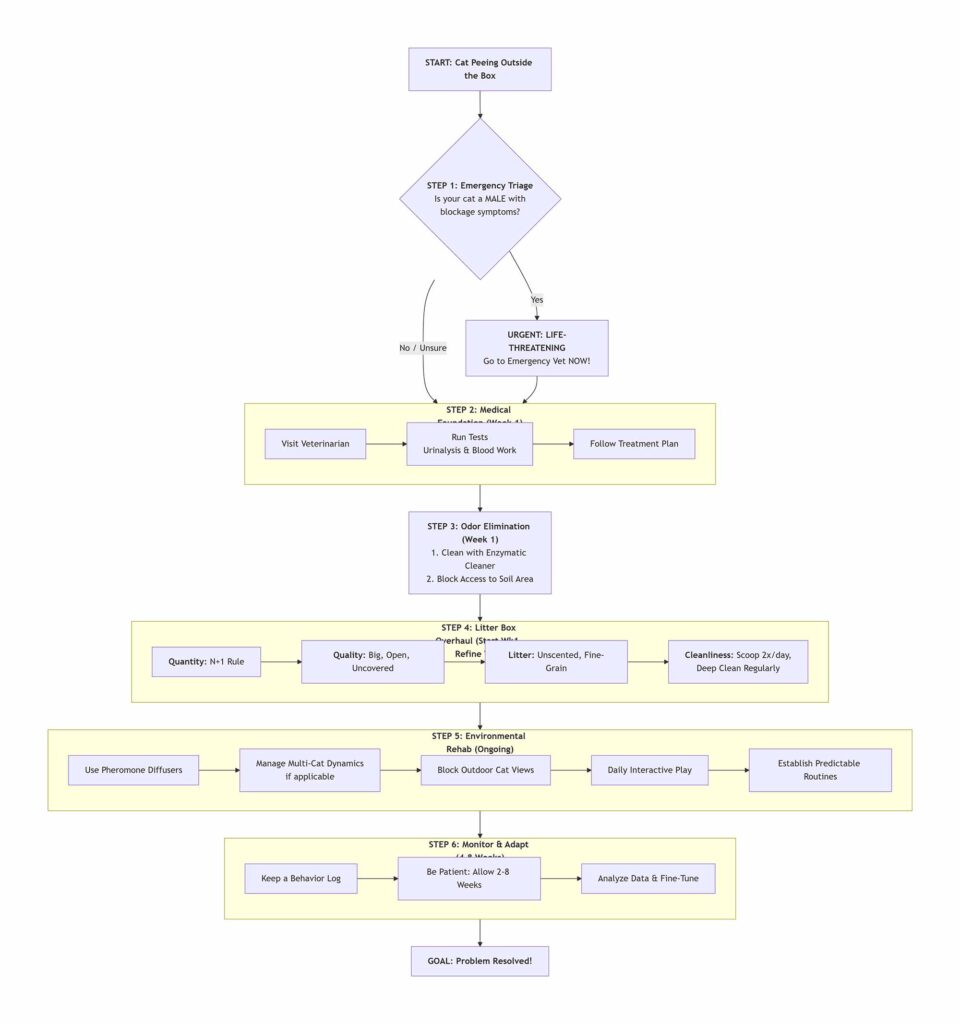
Stop Cat Peeing Outside the Box: 6-Step Solution Flowchart
Realistic Timeline: When Will Your Cat Stops Peeing Outside the Litter Box?
The path forward is clear. Faithfully implement the six-step solution you’ve learned. While results can vary—sometimes appearing in as little as 1-3 days, other times requiring a steady 3-8 weeks of consistent management—you can be confident that the persistent problem of cat peeing outside litter box will be resolved.
- Primary Medical Issue (e.g., UTI): Once appropriate medication relieves pain and urgency, a return to the box can be within 1-3 days, especially if the box setup is already adequate.
- Pure Litter Box Aversion: After a successful overhaul (right number, type, litter, location), you may see a near-immediate shift (within 1-7 days) as the cat chooses the new, preferable options.
- Stress-Based Marking or Chronic Anxiety: Improvement is gradual over 3-8 weeks. You should see a steady decrease in frequency as environmental modifications (pheromones, play, resource management) lower the cat’s overall stress baseline. Setbacks can occur with new stressors.
When to Call a Pro: Signs Your Cat Needs Expert Help
Consult a Certified Cat Behavior Consultant (CCBC) or a Veterinary Behaviorist (DACVB) if:
- The problem persists after 8+ weeks of diligent, consistent implementation of all steps above.
- There is severe aggression between household cats.
- The problem is extremely destructive or dangerous (e.g., spraying electrical outlets, urinating exclusively on kitchen counters).
- You feel overwhelmed, stuck, or your relationship with your cat is deteriorating.
These professionals can provide customized behavior modification plans, including advanced techniques like systematic desensitization and counter-conditioning.
From Frustration to Harmony: Restoring Peace and Trust
When we encounter the issue of cat peeing outside box, we’re faced with a complex puzzle—but one that can truly be solved. Moving from frustration to understanding begins with a simple yet powerful shift: seeing those accidents not as acts of defiance, but as your cat’s clearest attempt to communicate. Whether the cause is medical, environmental, or emotional, each instance of cat peeing outside litter box is a message waiting to be decoded.
By responding with patience and a structured approach—starting with a veterinary visit, thoughtfully optimizing the litter setup and home environment, and tending to your cat’s emotional needs—you do far more than clean a stain. You ease their distress, rebuild trust, and ultimately restore the harmony that makes living with a cat so deeply rewarding. This isn’t just about solving a “cat peeing outside litter box” problem; it’s about strengthening the bond you share.
Get Your Free Kit: Stop Cat Peeing Outside the Litter Box
To help you put these solutions into practice, CatPeeingSolutions.com provides downloadable, ready-to-use resources:
- Litter Box Audit Checklist – Systematically evaluate and optimize your setup.
- Cat Stress Source Identification Questionnaire – Pinpoint hidden triggers affecting your cat.
- Complete Printable Action Checklist – A step-by-step guide to resolve inappropriate elimination.
Get these tools to finally solve “Why is my cat peeing outside the litter box” and restore a clean, happy home.
Related Articles
-

-
 Do Female Cats Spray? The Complete Guide to Why & How to Stop It Wondering if female cats spray? The answer is yes. Discover the surprising reasons why female cats spray, how it differs from male cats, and proven methods to stop this behavior. Get answers to “can female cats spray?” and “do girl cats spray?” here.
 -

-
 Why Do Male Cats Spray? When & How to Stop It Worried about spraying? Find out exactly when male cats start spraying, why they do it, and how often it happens. Get the definitive answer to “do male cats spray after being fixed?” and learn effective, vet-approved methods to stop this behavior for good.