
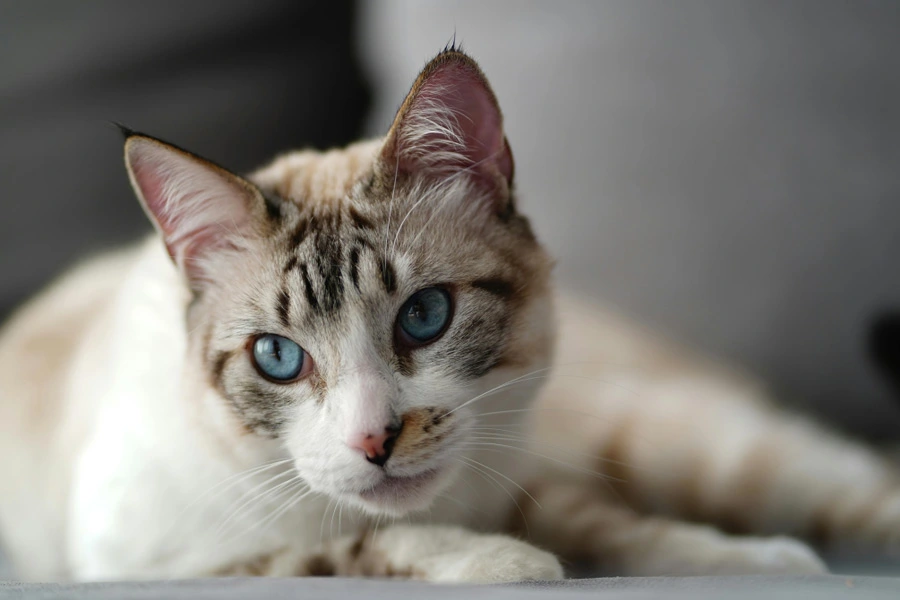
- What is Cat Spraying? From Identification to Elimination: Avoid Common Pitfalls
- cat spray vs pee: Urgent Guide to Tell if Your Cat is Sick or Marking
- What Does Cat Spray Smell Like? (Why It’s So Hard to Remove)
- When Do Cats Start Spraying? (What Age & Key Triggers)
- Why Do Cats Spray Urine?
- Do Female Cats Spray? And Can Neutered Cats Still Spray?
- How to Stop a Cat From Spraying: The 3-Step Proven Method
- How to Remove Cat Spray Odor for Good: The Science of Enzyme Cleaners
- Related Articles
What is Cat Spraying? From Identification to Elimination: Avoid Common Pitfalls
What does cat spraying mean? What is cat spraying? Cat spraying (commonly referred to as “marking behavior” or “cat urine marking”) is a common feline behavior where cats spray small amounts of urine onto vertical surfaces like walls, furniture, or door frames to mark territory or communicate.
If you find your cat spraying urine on walls, or suddenly squirting urine at curtains, corners, or the armrest of your favorite sofa, take a deep breath first. This isn’t revenge, nor is it deliberate mischief—it’s your cat using its most primal method—cat spraying—to post a “chemical status update.”
Here’s a little-known fact: approximately 10% of domestic cats will spray at least once in their lifetime. While male cats are indeed more “active posters,” female cats are far from “silent users”—their motivations for spraying simply differ entirely from males.
This article skips complex theories, offering only a practical guide distilled from my own trial-and-error experiences. If your cat is spraying urine or you fear they might start, follow the steps below to save at least three months of frustration.
cat spray vs pee: Urgent Guide to Tell if Your Cat is Sick or Marking
This is the most crucial step—get it wrong, and all subsequent efforts may be wasted.
It’s easy to confuse cat spraying with cat urination, but they differ entirely in behavioral motivation, presentation, and solutions.
First, take this 30-second quick assessment—is your cat spraying or urinating?
Cat Spray vs Pee: Core Differences
| Characteristic | Peeing | Cat Spraying | Medical Emergency (Danger!) |
| Posture | Squatting, relaxed back | Standing, tail held high and quivering | Squatting but with a pained expression, or in an odd posture |
| Location | Litter box, horizontal surfaces,Anywhere, including outside the litter box | Vertical surfaces (walls, furniture legs) | Anywhere, including outside the litter box |
| Urine Amount | A puddle, a larger volume | Small amount sprayed, linear or fan-shaped pattern | Dribbling, or being completely unable to urinate |
| Frequency | Several times daily | Intermittent, often after specific triggers | Suddenly frequent, or not urinating at all |
| Cat’s Demeanor | Leaves calmly after finishing | May look “satisfied” afterwards, or anxious | Litter box, horizontal surfaces, anywhere, including outside the litter box |
By comparing the “Spraying vs. Peeing” table:
If you see symptoms in the “Medical Emergency ” column on the right, stop reading immediately and take your cat to the vet. Urinary obstruction (inability to urinate) is a life-threatening emergency for male cats that can be fatal within 24 hours.
If symptoms match the “peeing” column on the right, please refer to our guide, “Cat Peeing Outside the Litter Box: Reasons & Fixes.” It is designed to help you completely resolve your cat’s inappropriate urination issues.
If your cat’s symptoms match the “Cat Spraying” column, the important thing to know first is that serious illness is usually not the cause. Now, let’s focus on the second part: understanding and stopping the spraying behavior.
What Does Cat Spray Smell Like? (Why It’s So Hard to Remove)
Does cat spray smell like pee? What does cat spray smell like? To be precise, Cat spray smells stronger and more pungent than cat urine. Cat spray odor smells like someone has simultaneously opened a room filled with the scents of ammonia, skunk, rotten fish, garlic/sulfur, and stale beer—a potent blend of odors.
Many cat owners describe it this way: “Cat spray odor is so intensely pungent and overpowering, I doubt I’ll ever forget it in my lifetime.”
Characteristics of Cat Spray Odor:
- More Intense: While cat spray smells like pee, it is much more concentrated. Over three times more pungent than regular cat urine, with a sharp, spicy sensation
- More foul: Combines skunk-like musk with a fermented sourness
- More persistent: Won’t dissipate even after a day of airing out windows due to oily pheromone molecules
Why does cat spray odor smell so “unique”?
- Sexual Pheromones: The spray of unneutered male cats contains metabolites of testosterone, used to signal their gender and reproductive status. This attracts female cats while serving as a competitive warning to other males.
- Sulfur compounds: These are the source of the “skunk-like” or “garlic-like” odor. Highly volatile, these compounds ensure the scent travels farther and lasts longer, maximizing message delivery.
- Identity markers: Each cat’s urine scent is as unique as a fingerprint, carrying information about the individual’s health, social status, and more. The strong odor ensures the clarity of this “signature.”
The Solution? Because of these unique properties, removing cat spray requires specific techniques. For a step-by-step plan to completely neutralize the odor, visit our comprehensive resource: The Ultimate Guide to Cat Urine Smell Removal.
When Do Cats Start Spraying? (What Age & Key Triggers)
When does a cat start to spray? At what age do cats start spraying urine? The onset of urine spraying (cat urine marking) in cats is primarily linked to two factors: sexual maturity and environmental stimuli.
Most Common Onset: Sexual Maturity
This is the primary and most prevalent trigger for feline spraying behavior.
Male cats typically reach sexual maturity between 5 and 8 months of age, at which point, male cat spraying commonly begins.
Female cats: Cat spraying can also begin with a female cat’s first estrus cycle (typically between 5 and 10 months of age), though it is less common than in males.
Other Potential Triggers for Urine Spraying (Irrelevant to Age)
Even neutered or adult cats may suddenly begin spraying urine under specific circumstances, such as when older cats develop cognitive dysfunction or experience significant environmental changes.
If yten sprays before 5 months old, we recommend:
- Document: Confirm if squatting (typical) or standing (rare, may indicate early maturity).
- Consult a vet: Have them assess development and determine the best neutering time.
Why Do Cats Spray Urine?
Why do cats spray? There are several causes of cat spraying. The causes mainly depend on 5 key factors:
- Territorial Marking
This is the primary reason for cat spraying. Cats spray urine to assert ownership over their space, especially in multi-cat households, in response to unfamiliar scents (such as visitors or new furniture), in new environments, or when they encounter other cats outdoors. - Stress or Anxiety
Changes in a cat’s environment—such as moving, new family members, or the loss of a companion—can trigger spraying. Disruption to their routine or insufficient resources (too few litter boxes, competition for resting spots) may also lead to stress-related marking. - Social or Sexual Motivation
Unneutered cats, particularly males, often spray to advertise their availability during mating season. Females in heat may also spray to attract potential mates. - Medical Issues
Cat spraying can be a sign of an underlying health problem, including urinary tract diseases (e.g., cystitis or stones), arthritis pain, or cognitive dysfunction in senior cats. A veterinary check is essential to rule out medical causes. - Learned Behavior
If cat spraying successfully achieves a desired outcome—such as scaring away an outdoor cat or eliciting extra attention from the owner—the behavior may be reinforced. Over time, the cat may spray habitually to attain specific goals.
Do Female Cats Spray? And Can Neutered Cats Still Spray?
Question 1: Do Female Cats Spray?
Yes! Female cats spraying urine is far more common than you might think.
But female cat spraying is entirely different from male cat spraying:
- Male cat spraying is like: “This turf is mine!”
- Female cats’ spraying is more like: “I’m stressed out and about to snap!”
Question 2: Can Neutered Cats Still Spray?
Cat spraying after neuter. Neutering is a “key solution,” but not a ‘universal cure.
- For unneutered male cats: Neutering resolves over 90% of cat spraying issues (most effective)
- For neutered males: If spraying became habitual before neutering, it may persist afterward.
- For all cats: Neutering has a limited effect on stress-related cat spraying; you must address the stressor itself.
Optimal neutering timing: Before the first signs of cat spraying appear (typically 5-6 months old). Neutering after the habit forms is like trying to break a leg-shaking habit after it’s already ingrained—much harder.
How to Stop a Cat From Spraying: The 3-Step Proven Method
I understand that you want to stop your cat from spraying as soon as possible. However, trust me, you must follow the steps in order. Back when I was dealing with this, I jumped right in without first figuring out how to stop a cat from spraying, and it ended up costing me two whole months of frustration.
1 Step 1: Rule Out Medical Issues (The Non-Negotiable First Step)
Don’t take chances. Don’t skip this step.
- If the cat is older: Add a basic blood panel and ultrasound.
- Schedule a vet appointment and state clearly: “My cat may be spraying urine. I want to rule out urinary tract issues.”
- Mandatory tests: Urinalysis (urine test) — this is fundamental.
My friend’s cat sprayed for three months. They tried every behavioral correction method to stop a cat from spraying. Ultimately, it was diagnosed with early-stage kidney failure. What was needed was medication, not behavioral correction.
2 Step 2: Neutering – Your Most Powerful Tool to Stop Spraying
- Male Cats: Hormone levels decrease within weeks after surgery, with a noticeable reduction in feline urine marking typically observed within 1-3 months. Neutering is the primary method to get a healthy adult cat to stop spraying.
- Female Cats: Eliminates the motivation for marking during estrus, but for stress-related spraying, Step 3 is still required.
3Step 3: Fix the Environment & Behavior (The Permanent Solution)
This step requires the most patience, but it is also the most effective — it teaches you how to get a cat to stop spraying for good by truly addressing the root cause of the behavior.
- A. For Multi-Cat Households (Most Common Cause)
- Provide ‘excess’ resources: Number of litter boxes = Number of cats + 1. Place them separately, not crowded together.
- Separate feeding: Avoid cats staring at each other while eating, as this causes significant stress.
- Create ‘safe zones’: Each cat must have an inaccessible refuge (e.g., a room or the top level of a tall cat tree).
- B. Environmental Stressors
- Block Window Views of Rivals: Draw curtains or apply frosted glass stickers to prevent cats from seeing outdoor strays.
- Introduce Scent to New Items: When new furniture arrives, wipe it down with a towel rubbed against your cat to infuse its scent.
- Maintain consistent routines: Keep feeding and playtimes as fixed as possible.
- C. If the habit is already established
- Place food bowls, water bowls, or a cat bed near areas where they frequently spray. Cats usually avoid urinating where they eat or sleep.
- Use pheromone products: Pheromone diffusers (like Feliway) can have a calming effect on some cats—it’s worth trying.
- Positive reinforcement: Immediately reward the cat with treats when it urinates correctly in the litter box. Never punish—punishment only increases anxiety and drives spraying into more hidden locations.
If you’re wondering how to get your cat to stop spraying, the first step isn’t punishment, but understanding. Many owners search for ‘how to stop cat spraying indoors’ when they discover marks on the wall. However, effective solutions for cat spraying always start with identifying the cause—whether it’s stress, a medical issue, or territorial insecurity.The above are the proven methods to prevent cat spraying. Follow the steps, and they can help you.
How to Remove Cat Spray Odor for Good: The Science of Enzyme Cleaners
“My biggest mistake was thinking disinfectant could eliminate cat spray smell. The result? My cat sprayed that wall for a whole year because it kept detecting the ‘this spot needs re-marking’ signal.”
The science you need to know:
Cat spraying contains pheromone proteins. These proteins are insoluble in water. Therefore:
- Wiping with water: Doesn’t work
- Baking soda: Slightly effective at getting rid of fresh cat pee smell, but useless on old stains or spray marks.
The only effective solution: Enzyme cleaner
Enzymes break down pheromone proteins, eliminating the scent signal.
Correct steps:
- Blot dry: Use paper towels to absorb as much urine as possible (do not rub back and forth, as this spreads contamination).
- Soak: Generously saturate the affected area with enzyme cleaner, ensuring deep penetration.
- Wait: Keep the area damp for at least 24 hours (enzymes require time to work).
- Air dry: Allow to dry naturally; do not use hot air or rub dry.
- Repeat: For cleaning old urine stains, repeat the above steps 2-3 times.
Special Treatment for Key Areas:
- Walls/Furniture: Use a syringe or spray bottle to inject cleaner deep into surfaces.
- Carpets/Mattresses: Cover with plastic sheeting after soaking to maintain moisture.
- Concrete Floors/Tile Grout: These materials absorb urine and may require professional cleaning services.
Key Product Selection Tips: Look for labels explicitly stating “enzymes” or “biological enzymes” in the ingredients list. Don’t rely solely on “urine odor removal” claims.
Managing cat spraying is less about correcting a problem and more about starting a new conversation with your cat. They speak through their actions. When we listen—by interpreting these potent “scent messages”—our relationship frequently deepens into a new chapter of mutual comprehension.
Related Articles
-
 Do Female Cats Spray? The Complete Guide to Why & How to Stop It Wondering if female cats spray? The answer is yes. Discover the surprising reasons why female cats spray, how it differs from male cats, and proven methods to stop this behavior. Get answers to “can female cats spray?” and “do girl cats spray?” here.
 -
 Why Do Male Cats Spray? When & How to Stop It Worried about spraying? Find out exactly when male cats start spraying, why they do it, and how often it happens. Get the definitive answer to “do male cats spray after being fixed?” and learn effective, vet-approved methods to stop this behavior for good.
 -

-
 Cat Urine Smell Removal: The Only Method That Actually Works (Step-by-Step Guide) If you’re searching for how to get rid of cat urine smell permanently, you’ve likely tried everything. This guide reveals the only method that actually works to remove cat urine smell completely. Follow our step-by-step process to get cat urine smell out of any surface for good.